Older properties in neighborhoods such as The Acre, Highlands, and Back Central frequently feature balloon framing and mature wooden structural members vulnerable to wood-boring pests. Unlike termites that ingest…
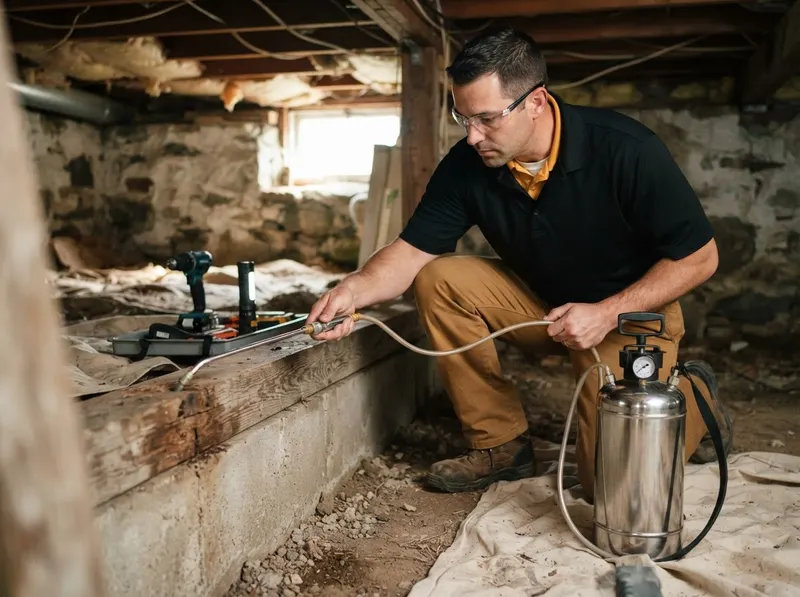
Older properties in neighborhoods such as The Acre, Highlands, and Back Central frequently feature balloon framing and mature wooden structural members vulnerable to wood-boring pests. Unlike termites that ingest cellulose, carpenter ants excavate smooth, clean galleries within softened structural timbers to house egg nurseries and primary satellite colonies. The presence of coarse, sawdust-like frass containing insect parts beneath baseboards, sill plates, or basement joists near the Concord River Greenway indicates active internal structural excavation rather than simple transient foraging from exterior yards.
Effective management requires differentiating localized foraging from deeply nested internal parent colonies. Routine surface sprays merely kill visible foraging workers, causing the broader parent colony to fracture and scatter deeper into wall cavities behind lath and plaster. Structural defense relies instead on undetectable non-repellent transfer chemistry applied along structural junction points, foundation stone, and porch ledger boards. Foraging workers carry the undetectable toxicant back through the nest matrix, sharing it with queens and non-foraging larvae through trophallaxis to collapse the colony at its source.
Structural modifications and targeted exclusion protect the home after colony mortality is achieved. Moisture leaks from aging slate roofs, failing box gutters, or historic mill-brick moisture transfer around Downtown Lowell and Centralville create the damp wood environments these insects require. If an owner is dealing with dry structural timbers, carpenter ant satellite nests are often small offshoots from an exterior dead tree; if timbers are wet or decayed near stone foundations, primary parent nests are frequently embedded directly inside the framing. Correcting roofline drip edges, cutting tree limbs 3 feet back from roof eaves, and injecting micro-dusts into dry voids ensures structural framing remains protected against re-infestation.
Every job gets a firm, written price after a free on-site visit.
Tell us about your carpenter ant structural defense job in Lowell and we'll send a clear, written quote, usually the same day.
 Zandrix Insect Defense