Multi-family pest management serves rental properties where shared utility chases, party walls, and connected plumbing lines permit insect and rodent movement between units. In neighborhoods like The Acre, Highlands,…
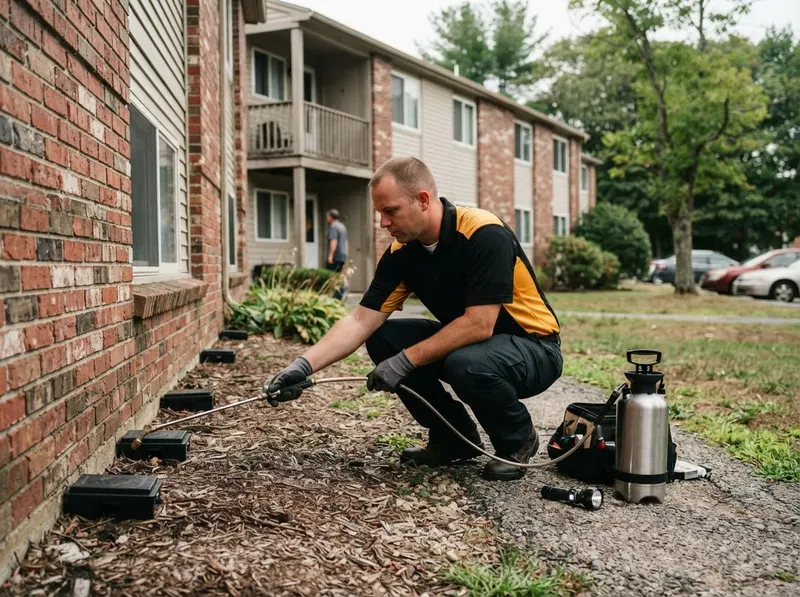
Multi-family pest management serves rental properties where shared utility chases, party walls, and connected plumbing lines permit insect and rodent movement between units. In neighborhoods like The Acre, Highlands, and Back Central, Lowell's traditional multi-family housing inventory, ranging from wood-frame triple-deckers to converted brick textile mills near the Merrimack River, contains interconnected pipe runs that shelter German cockroaches and rodents. Spot-treating a single kitchen fails because chemical repellents push populations through drywall voids into neighboring apartments. Effective management requires synchronous multi-unit treatment combined with mechanical exclusion around pipe collars, radiator lines, and subfloor breaches.
Property owners face distinct operational trade-offs between isolated tenant reactive spraying and full-structure integrated remediation. Treating single units reactively carries lower initial out-of-pocket costs but results in chronic re-infestation, sustained tenant turnover, and municipal sanitation citations under Middlesex County housing standards. Whole-building barrier defense requires coordinated tenant access and a higher initial outlay, yet it halts reproductive cycles across the entire building envelope. For 2-family to 4-family flats in Centralville and Pawtucketville, a whole-envelope inspection identifies compromised perimeter sills and foundation gaps before pests colonize interior living quarters.
Structural exclusion acts as the core defense mechanism. Rather than applying continuous surface sprays that degrade within 30 to 60 days, physical blockades establish durable barriers against infestation. Technicians seal basement utility penetrations with copper mesh and elastomeric sealants, secure crawlspace ventilation points, and install door sweeps across common exterior entries. In dense multi-family corridors near Downtown Lowell and Sacred Heart, preventing exterior access stops wild Norway rat populations active along canal networks from establishing nesting sites in residential boiler rooms. This approach targets biological vulnerabilities directly without locking property managers into inflexible, unmonitored chemical application contracts.
1. Initial structural inspection identifies entry points, shared wall pathways, and moisture zones across common areas and connected apartments. 2. Synchronized non-repellent formulations and biological growth regulators are applied inside targeted wall voids. 3. Mechanical exclusion seals baseline pipe penetrations, radiator gaps, and exterior masonry breaches. 4. Tamper-resistant biological monitoring stations are set in basements and trash staging areas to verify zero migration.
Every job gets a firm, written price after a free on-site visit.
Tell us about your multi-family pest management job in Lowell and we'll send a clear, written quote, usually the same day.
 Zandrix Insect Defense