Rodent control in historic Merrimack Valley architecture requires physical barrier defense rather than recurring, untargeted chemical broadcasting. In multi-family tenements and Victorian properties across The Acre,…
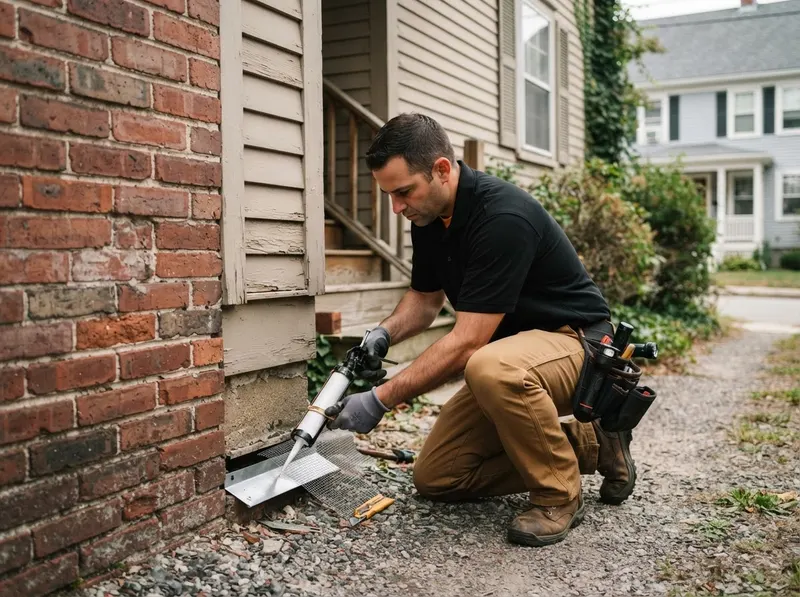
Rodent control in historic Merrimack Valley architecture requires physical barrier defense rather than recurring, untargeted chemical broadcasting. In multi-family tenements and Victorian properties across The Acre, Highlands, and Back Central, fieldstone foundations settle and mortar deteriorates, creating gaps as narrow as 0.25 inches. Norway rats and house mice utilize these gaps near ground level, tracking pipe conduits upward into kitchen pantries, wall cavities, and ceiling spaces. Scratching sounds inside lath-and-plaster walls and droppings along floor joists confirm established interior travel corridors. Chemical baits placed inside living areas risk rodent mortality within wall voids, leading to secondary odor and insect infestations. Mechanical abatement captures existing rodents immediately, while structural exclusion permanently removes access.
Decision guidance depends directly on property architecture. If a structure possesses an intact poured-concrete foundation with modern vinyl siding, perimeter exclusion focuses narrowly on crawlspace vents and HVAC line penetrations. If a structure is an older two-to-three-family home in Centralville, Sacred Heart, or Pawtucketville with rough-hewn stone walls and dirt floors, comprehensive exclusion requires extensive metal flashing, masonry pointing, and buried wire barriers along the perimeter. The primary trade-off is upfront structural intervention versus ongoing baiting: structural exclusion requires thorough carpentry and masonry repair, yet it eliminates the recurring subscription expenses and poison hazards common to generic extermination routines.
Older neighborhoods bordering water corridors, such as Downtown Lowell and Belvidere near the Concord River Greenway and Merrimack River, experience elevated rodent pressure during seasonal autumn temperature drops. Rats travel through subterranean sewer connections and drainage corridors, exploiting openings around basement bulkheads, rotted window frames, and exterior sill plates. Zandrix Insect Defense applies 19-gauge galvanized hardware cloth, copper mesh, and elastomeric sealants along all utility entries to resist gnawing. This scientific perimeter method seals vulnerable historic envelopes, solving the biological attractant problem at its root without hidden recurring fees.
Every job gets a firm, written price after a free on-site visit.
Tell us about your rodent exclusion and abatement job in Lowell and we'll send a clear, written quote, usually the same day.
 Zandrix Insect Defense