Older architecture throughout Lowell presents specific structural pathways that modern synthetic sprays alone cannot remediate. Fieldstone basements in Centralville and brick row houses in Back Central settle over…
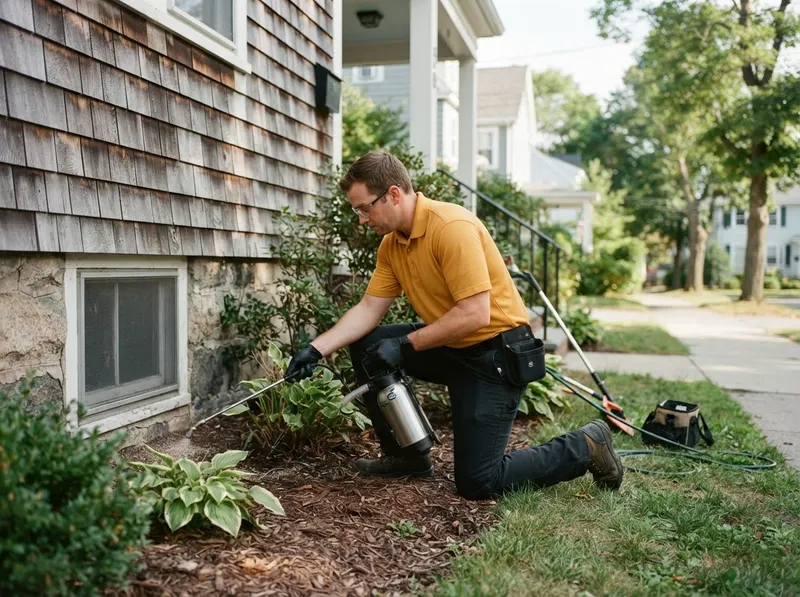
Older architecture throughout Lowell presents specific structural pathways that modern synthetic sprays alone cannot remediate. Fieldstone basements in Centralville and brick row houses in Back Central settle over decades, creating expansion gaps along sill plates and foundation mortar. Rodents require an opening of only 0.25 inches to penetrate interior walls, where scratching noises disturb tenants and cause sleep disruption. Standard pesticide applications fail when the mechanical entry points remain accessible. Zandrix Insect Defense seals foundation penetrations using galvanized wire mesh and elastomeric caulking, establishing a physical boundary that stops access before any interior biological treatment occurs.
Multi-family buildings in Downtown Lowell and Sacred Heart experience rapid pest transfer between adjoining walls, plumbing chases, and drop ceilings. When one unit encounters German roaches or mice, adjacent kitchens face immediate food contamination and pantry infestations. For isolated single-room sightings, localized bait stations and mechanical traps eliminate the immediate population. For continuous multi-unit tenant complaints, comprehensive wall-void dusting and vertical chase sealing are necessary. Choosing targeted structural exclusion avoids the expense of endless monthly chemical spraying, though it requires an initial physical survey of heating pipes, cellar windows, and porch foundations.
Properties situated along the Concord River Greenway, the Merrimack River, and Shedd Park experience seasonal migration pressure as outdoor temperatures shift in autumn. In neighborhoods like Pawtucketville, South Lowell, and the Highlands, subterranean mice and peridomestic insects track moist exterior soil toward heated stone foundations. Interventions are coordinated through a systematic sequence: step one is a baseline moisture and perimeter assessment; step two is mechanical sealing of ground-level gaps; step three is the targeted distribution of low-volatility insect growth regulators inside infested partition walls. This structured approach prevents sudden upcharges by identifying the exact biological species and structural defects prior to commencing physical work.
Every job gets a firm, written price after a free on-site visit.
Tell us about your residential pest control job in Lowell and we'll send a clear, written quote, usually the same day.
 Zandrix Insect Defense